World Climate Change Day - May 15th
On May 15, World Climate Change Day is marked around the world. The purpose of this day is to warn the public about the increasingly obvious climate changes that are the result of human activity.
Climate change is becoming more and more evident. Measurements show a significant trend of rising temperatures in recent decades in Slovenia as well, and climate change is already affecting life in our country. The number of extreme weather events is also increasing in Slovenia; we are increasingly experiencing summer droughts and exceptional rainfall, which can cause serious inconvenience. The precipitation regime is changing, winters are getting shorter and natural disasters are increasing.
The fact is that we can no longer prevent climate change, but we can mitigate and slow it down. In order to prevent the catastrophic consequences of large-scale climate change, it is necessary to significantly reduce greenhouse gas emissions.
We will not be able to avoid some of the negative effects of climate change and must adapt to them.
The impact of climate change on tourism
Tourism is an activity with a major impact on climate change, mainly due to the greenhouse gas emissions associated with mobility. At the same time, the consequences of climate change all over the world are already changing the competitiveness of tourist destinations and affecting tourist flows, which will intensify in the future if climate change mitigation is unsuccessful. Weather conditions affect human comfort, so climate is a key part of the tourist offer of any destination. This also applies to destinations such as Krško, which invite visitors to various outdoor events and sports and recreational activities in nature.
The climate in the municipality of Krško has already warmed by 1.8 °C since the 1960s, the annual amount of precipitation has decreased by almost 10%, and the amount of newly fallen snow has halved. The warming trend will continue in the future. By the middle of the century, the average air temperature may be 1.7 °C higher than it is today. In summer, the number of hot days with a temperature above 30 °C will increase, heat waves will be more frequent, stronger and longer.
The summer heat will be more and more unpleasant for outdoor tourist activities, especially in an urban environment. The destination will be faced with the need to develop a summer tourist offer that will be less sensitive to the summer heat. In doing so, it can upgrade the offer of cultural tourism in closed spaces, and above all take advantage of the untapped potential of arranging natural swimming pools and developing tourism in the countryside, where the heat is less unpleasant than in the city.
In increasingly hot summers, heat stress at the workplace for tourism workers will also increase. The need for thermal insulation and air conditioning of buildings (tourist accommodation, museums, restaurants, etc.) will also increase, and thus the costs of tourism providers.
In the coming decades, the destination will also warm up in the remaining seasons. Warmer springs and autumns will reduce the feeling of cold during outdoor activities, and warming a destination can increase its appeal during these seasons. The conditions for outdoor winter activities will not significantly improve in the destination, as rain will fall more and more often instead of snow. As the winter temperature rises, the trend of shortening the heating season will continue and the costs of tourist providers for heating buildings will decrease.
Rising temperatures and changing rainfall patterns will affect nature in the destination, which is an invaluable development resource for tourism. Biodiversity and the condition of forests, which cover 43% of the municipality's surface, may deteriorate. Climate change will also affect agricultural production and thus the gastronomic offer based on local produce. Changed climatic conditions can threaten production or the quality of domestic wine varieties and other traditional agricultural products.
What is the difference between adaptation and mitigation?
Adaptation means anticipating the adverse effects of climate change and taking appropriate action to prevent or reduce the damage. Examples of adaptation measures include large-scale infrastructural changes, such as building protections against sea level rise, and individual behavioral changes that reduce food waste.
Mitigation means limiting the impacts of climate change by preventing or reducing greenhouse gas emissions into the atmosphere. Mitigation is achieved by limiting sources and gases, e.g. by increasing the share of energy from renewable sources or establishing a cleaner mobility system.
What can we do ourselves as individuals and/or as tourist visitors?
By making simple changes in our habits, we can prevent the formation of greenhouse gases without reducing the quality of life:
- buy locally produced and seasonal food, eat less meat,
- using public transport,
- save water,
- ensure good insulation at home,
- reduce electricity consumption (smart regulation of heating and cooling, economical and efficient use of electrical appliances and lighting)
- buy products that mean less waste,
- fix the broken instead of throwing it away,
- donate the excess,
- recycle the useless.
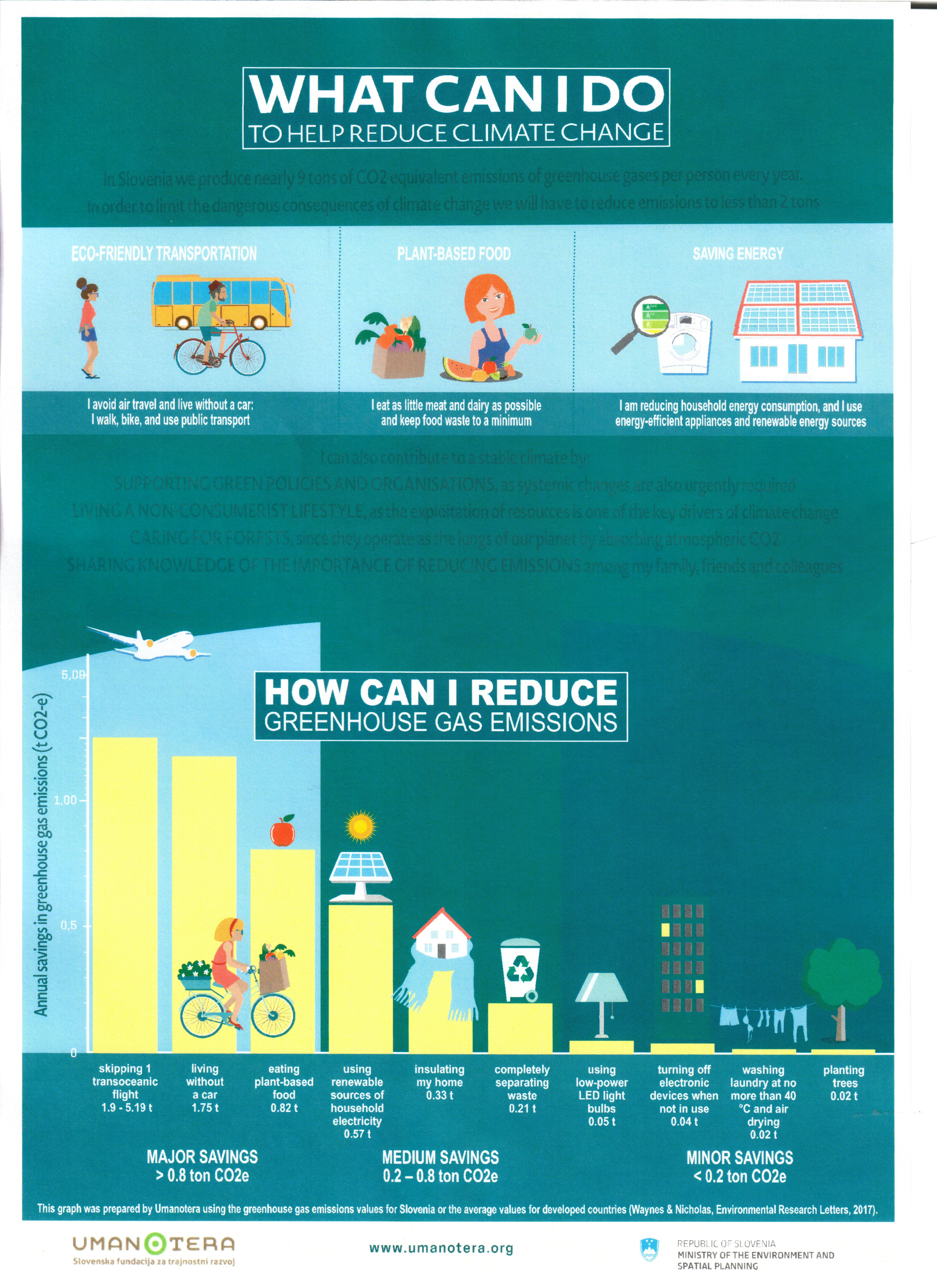
Photo: Umanotera
Source: Umanotera, CPT Krško


